CBN Data Localisation Policy: What It Means for Nigeria's Fintech Industry | Belema
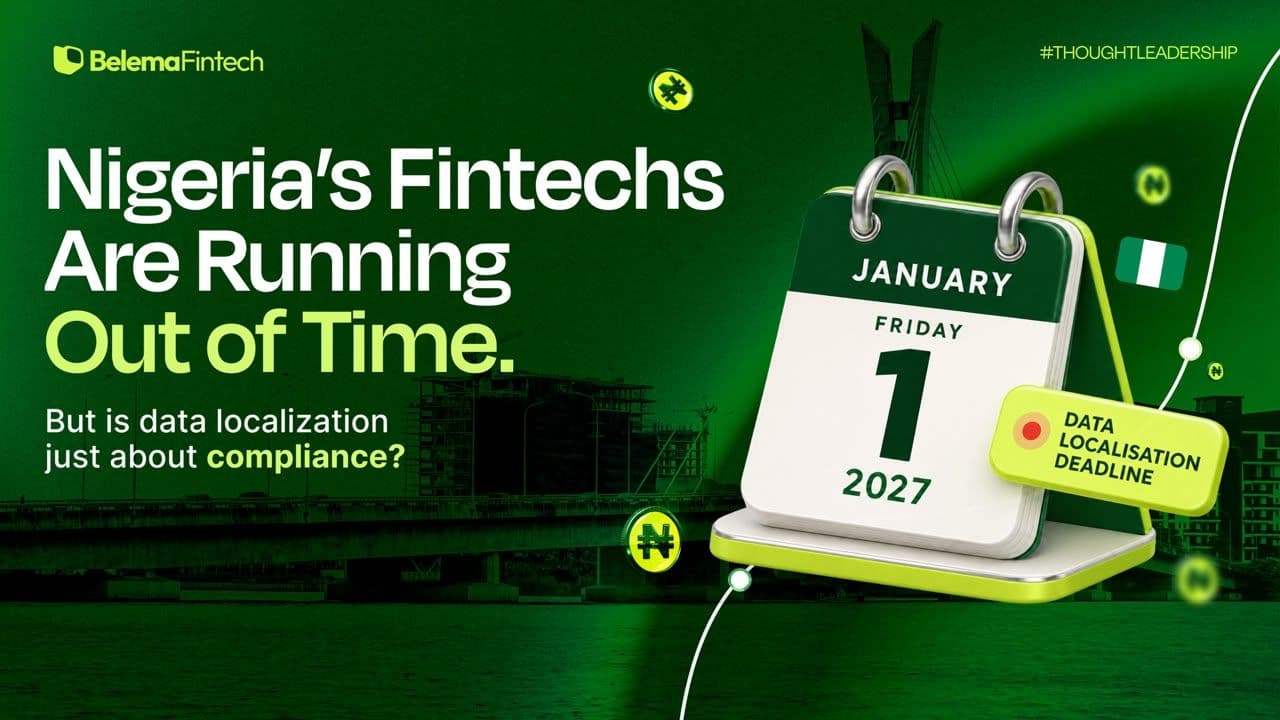
With a January 1, 2027 deadline approaching, Nigeria's fintechs face a major shift in how they store, manage and protect payment transaction data. Beyond compliance, the directive could reshape infrastructure investments, operating costs and the future of digital payments.
Nigeria's fintech industry has grown rapidly, driven by digital innovation, financial inclusion and the increasing adoption of electronic payments. From payment gateways and mobile wallets to switching companies and digital banking platforms, technology has transformed how Nigerians send, receive and manage money.
However, as the ecosystem expands, so does the need for stronger regulation, data protection and operational accountability.
In June 2026, the Central Bank of Nigeria (CBN) issued a directive requiring banks, fintechs, mobile money operators and other covered payment service providers to store and manage payment transaction data generated within Nigeria locally.
With a compliance deadline of January 1, 2027, the directive introduces significant changes for financial institutions, particularly those relying on international cloud infrastructure and third-party technology providers.
But what does this mean for fintechs, and how could it affect the future of digital financial services in Nigeria?
Understanding the CBN Data Localisation Policy
Data localisation refers to the requirement that specific categories of data generated within a country must be stored and managed within its geographical boundaries.
Under the CBN directive, covered financial institutions and payment service providers must ensure that payment transaction data generated within Nigeria are stored and managed locally.
The policy is intended to strengthen data sovereignty, improve regulatory oversight and reduce excessive dependence on foreign infrastructure for critical financial information.
It is important to distinguish this requirement from a blanket localisation of all customer data. The directive specifically addresses payment transaction data, while other categories of personal and financial information remain subject to their applicable regulatory and data protection requirements.
For fintechs, this means reviewing not just where their primary databases are hosted, but also how transaction data moves across their technology infrastructure.
Five Ways the Policy Will Impact Fintechs
- Increased Infrastructure and Operating Costs
One of the immediate implications is the potential increase in technology expenditure.
Many fintechs rely on international cloud platforms for transaction processing, database management, storage and application hosting. These platforms offer scalability and flexibility without requiring significant upfront infrastructure investments.
However, complying with the new directive could require investments in local hosting, data migration, cybersecurity, backup facilities and disaster recovery systems.
For established fintechs, these costs may be manageable. For startups and smaller payment providers, they could put pressure on operating margins, budgets and expansion plans.
- A Shift in Cloud and Technology Strategy
Fintechs will need to reassess their existing technology architecture to ensure it meets local data residency requirements.
This goes beyond moving a primary database to a Nigerian server. Businesses must also examine backup environments, disaster recovery systems, analytics platforms, transaction monitoring tools and third-party integrations.
For example, a fintech may host its primary transaction database locally while still replicating payment data to an international cloud region.
Such arrangements require careful assessment.
The directive could encourage greater adoption of local data centres, domestic cloud infrastructure and hybrid technology environments that balance scalability with regulatory compliance.
- Greater Focus on Cybersecurity and Resilience
Data localisation does not automatically guarantee data security.
Storing payment data within Nigeria does not eliminate cyber threats, system vulnerabilities or operational disruptions.
Fintechs must ensure that their local infrastructure is supported by strong encryption, access controls, monitoring systems, backup arrangements and disaster recovery capabilities.
The migration process itself also presents risks, including data loss, service interruptions and system performance issues.
The objective should therefore be to build infrastructure that is not only locally compliant but also secure, reliable and resilient.
- New Opportunities for Local Technology Providers
The policy could stimulate investment in Nigeria's digital infrastructure.
As financial institutions reassess their hosting arrangements, demand for local data centres, cloud services, cybersecurity solutions, network connectivity and managed infrastructure is likely to grow.
This presents opportunities for Nigerian technology companies to provide the infrastructure and expertise required to support the financial services industry.
However, local providers must demonstrate the reliability, security and scalability required by financial institutions.
The opportunity is significant, but infrastructure capacity must be matched by operational excellence.
- Increased Compliance Pressure and Competition
The cost and complexity of compliance could create an uneven playing field.
Larger fintechs may have the financial and technical resources to implement the required changes, while smaller operators could struggle with migration costs and infrastructure investments.
Some businesses may need to reconsider their technology partnerships, pricing structures and expansion plans.
On the other hand, fintechs that build secure, compliant and scalable infrastructure could strengthen their credibility with banks, merchants, customers and investors.
Compliance could therefore become more than a regulatory obligation. It could become a competitive advantage.
Is the Industry Ready?
The scale of the transition becomes clearer when we consider findings from a NITDA survey reported in October 2026.
According to the survey, approximately 59% of 44 financial institutions that responded to the readiness question had completed, or expected to complete, the required actions by the January 1, 2027 deadline.
However, 22 institutions had yet to begin implementation, highlighting the considerable work still required across the industry.
The challenge extends beyond identifying where payment data is stored. Institutions must also secure budgets, engage infrastructure providers, migrate systems and maintain uninterrupted services throughout the transition.
The findings suggest that readiness is not simply a technology issue. It is also a question of funding, planning, partnerships and organisational commitment.
What Should Fintechs Do Now?
With the deadline approaching, affected businesses should prioritise five actions:
-
Audit existing data infrastructure: Identify where payment transaction data is stored, processed, replicated and accessed.
-
Review cloud arrangements: Assess existing hosting environments, backup systems and third-party integrations.
-
Engage local infrastructure providers: Evaluate domestic providers based on security, reliability, capacity and scalability.
-
Strengthen security and resilience: Invest in cybersecurity, access management, business continuity and disaster recovery.
-
Establish a compliance roadmap: Set clear migration milestones, allocate budgets and involve technology, compliance and executive teams.
The goal should not simply be to meet the deadline, but to achieve compliance without compromising service delivery or innovation.
The Bigger Picture
Nigeria's data localisation policy represents an important development for the country's fintech and digital payments ecosystem.
While it introduces new financial and operational considerations, it also creates an opportunity to deepen local technology capabilities, strengthen digital infrastructure and build greater resilience across the financial services industry.
The success of this transition will depend on collaboration between regulators, financial institutions, infrastructure providers and technology companies.
Ultimately, the conversation should go beyond where payment data is stored.
It should be about building the secure, reliable and scalable infrastructure required to power Nigeria's next phase of digital finance.
At Belema Fintech, we believe the future of digital payments depends on more than moving money. It depends on building dependable payment infrastructure that enables businesses to transact, grow and scale with confidence.